INCIDENT LOGSept 2017
Gauri Lankesh
Editor · Bengaluru
Shot dead outside her home
Beat: Investigative reporting & commentary
Had previously faced sedition charges for her work.
Investigation later linked suspects to extremist networks.
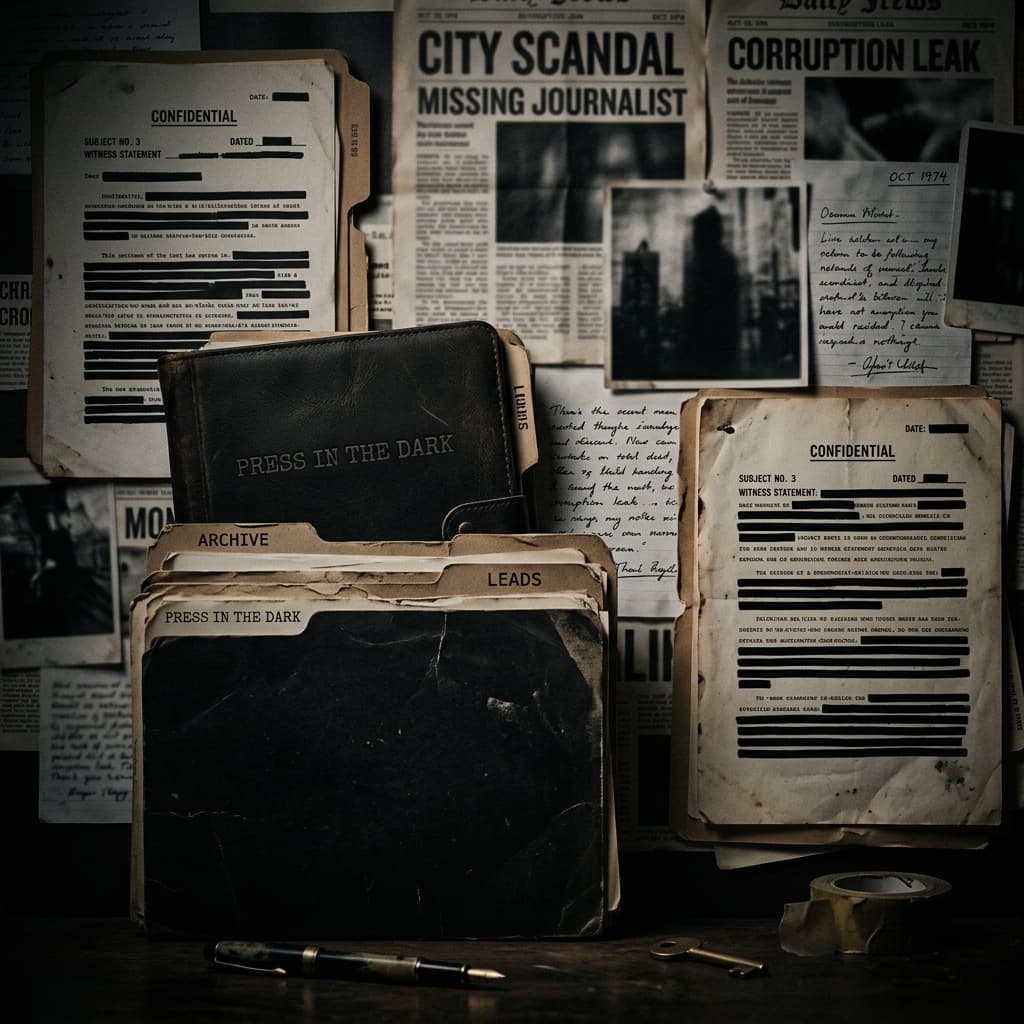
SEALED RECORD · OPENED 06 MAY 2026
The documented collapse of press freedom in India, 2014–2026.
The numbers confirm what the cases prove.
Imagine you work an unarmed job where doing it well can get you killed. Where the tools of your trade — a notebook, a phone, a camera — can be seized.
Where a law meant to catch terrorists can be used to keep you in prison for two years without a trial. Where the court that is supposed to protect you looks the other way.
That is the reality facing hundreds of journalists in India today.
This is not a political opinion. It is a documented record built from the findings of Reporters Without Borders, the Committee to Protect Journalists, Amnesty International, Human Rights Watch, and the Supreme Court of India itself.


.png&w=128&q=75)
↳ This is a documented record. Not an opinion.
SOURCE: RSF 2026 · LOWER RANK = LESS PRESS FREEDOM
"An unofficial state of emergency for Indian media."
The UAPA was originally designed to prosecute terrorism. What it also does is allow the state to detain a person for up to 180 days without trial, on evidence that need not be disclosed to the accused.
A 2019 amendment further allowed authorities to designate an individual a "terrorist" before any crime is proven in court.
Numbers can feel abstract. These are not numbers — they are real stories about real people, working without institutional protection.
Had previously faced sedition charges for her work.
Investigation later linked suspects to extremist networks.
Had written to local police expressing fear for his life.
Family alleged a targeted murder.
Pattern: most endangered are local journalists in smaller towns.
Worked without institutional protection or visibility.
The footage of the killing still exists today.
Died doing his job.
These were the journalists who were killed. Then there are those who were imprisoned.
Arrest. UAPA invoked. Travelling to cover Hathras.
He was one of dozens.
Siddique Kappan · Journalist · Kerala · Released without conviction.
In 2021, hundreds of Indian phones appeared on a leaked surveillance list.
Journalists were included.
So were opposition leaders.
And a former Election Commissioner.
Source: Amnesty International Security Lab · Forensic Methodology
The committee's findings were never made public.
↳ press and hold to reveal
Someone was watching.
Over 1 year blackout (2019–2020)
200-day shutdown during ethnic violence
Recurring exam-day shutdowns
Protest-period shutdowns
Localised district shutdowns
RSF estimates that ~70% of major Indian media outlets are owned by, or linked to, large conglomerates whose business interests intersect with government policy.
SOURCE: RSF · INDIA COUNTRY PROFILE
"The Prime Minister does not hold open press conferences."
— RSF, 2026. Interviews granted primarily to outlets and journalists considered sympathetic to the administration.
And India's own democracy monitors have noted the same pattern.
In 2021, US-based democracy monitor Freedom House downgraded India's status. The classification has not been restored in subsequent annual reports.
Sweden's V-Dem Institute classified India as an "electoral autocracy" in 2021, and listed it among significant autocratisers of the last decade in its 2024 report.
Both organisations apply standardised, cross-country methodologies consistently across governments of all political orientations.
The journalists in this account did not set out to be symbols.
90+ devices seized from journalists.
Most owners were never charged.
You may not follow political news. You may not particularly care about press freedom as an abstract value.
But a press that cannot report freely is a press that cannot tell you when official death tolls are inaccurate, when environmental regulations are being ignored, when public funds are being misused, or when institutions are not functioning as they should.
It is the reader's decision whether Kappan's 846 days without conviction, the 90+ devices seized from journalists never charged, the phones infected with spyware, are isolated events. If you find that they form a documented pattern — international institutions, India's own Supreme Court, and journalists across the political spectrum have already flagged it as serious.
"Disgraceful, shameful, but not surprising. Legislation has been systematically weaponised to stifle dissenting voices."
The journalists in this account did not set out to be symbols of anything. They set out to do their jobs and strengthen the fourth pillar of democracy.
"What happened to them when they did is a matter of public record, and public concern."
Verified incidents documented in this archive:
36 imprisonments · 4 deaths in archive · 4 raid clusters · 106 shutdowns/year ·
552 cumulative days offline · 2 confirmed Pegasus infections · 90+ devices seized ·
300+ phones on surveillance list · 35-point press freedom decline.
Ranked 157/180. 'Very serious' situation. 35-point decline over decade.
Methodology and global rankings.
Ongoing case tracking, attacks on press, imprisonment data.
Security-case bail proceedings and ongoing detentions.
Pre-election survey of journalist working conditions.
Global investigation into NSO Group's Pegasus spyware.
Forensic methodology for verifying Pegasus infections.
Confirmed Pegasus infections on Siddharth Varadarajan and Anand Mangnale.
Apple threat notifications received by journalists and opposition figures.
Civil and political rights monitoring including press freedom.
India classified 'Partly Free' since 2021 downgrade.
India listed among significant autocratisers; 'electoral autocracy' classification.
↳ Where an archived URL is unavailable, only the live source is shown. Sources not directly cited in the article are not included.
END OF FILE · PRESS-IN-THE-DARK · AAWAAJ MOVEMENT · 2026